Heavy equipment operates in some of the harshest environments — mining sites, construction zones, cement plants, quarries, and agricultural fields. These environments are filled with airborne contaminants like dust, sand, silica, and fine particles that constantly enter the air intake system.
The biggest threat to engine performance in these conditions is not fuel quality or mechanical wear — it is dust entering the engine.
This is why Multi Stage Engine Air Filters for Heavy Equipment are critical.
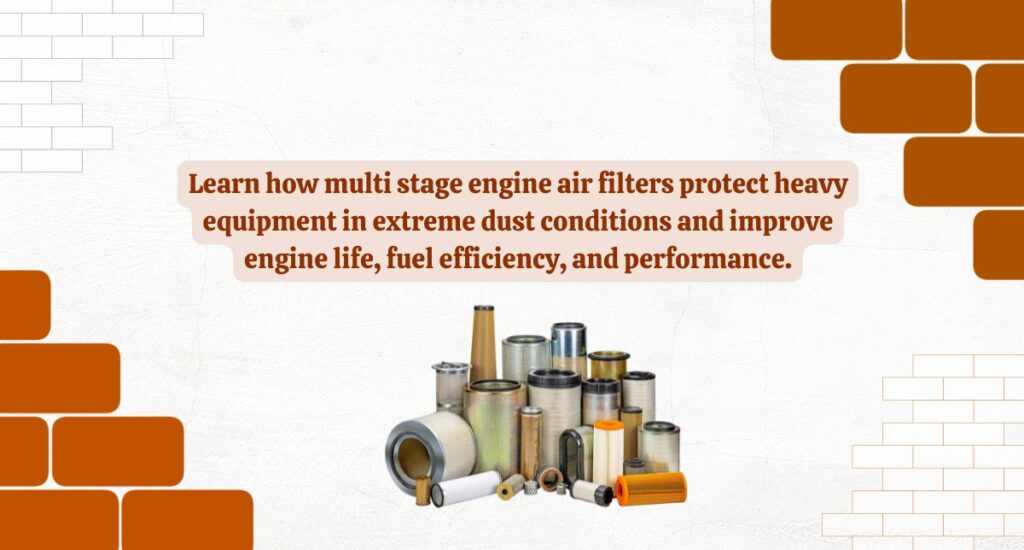
MMHP Engine Air Filters are designed to handle extreme dust loads and protect engines from contamination that can reduce performance, increase fuel consumption, and cause premature failure.
Let’s understand how multi-stage filtration works and why it is essential.
Why Dust Is the Biggest Enemy of Engines
Every engine requires clean air for combustion. For diesel engines especially, the air intake system must deliver a consistent volume of clean air.
In dusty environments, airborne particles include:
- Silica dust
- Cement powder
- Sand particles
- Metal debris
- Organic matter
When these particles enter the engine:
- Cylinder walls wear out
- Piston rings get damaged
- Oil gets contaminated
- Turbochargers lose efficiency
- Combustion becomes inefficient
Even microscopic dust particles can cause long-term damage.
This is why Multi Stage Engine Air Filters for Heavy Equipment are necessary.
What Are Multi Stage Engine Air Filters?
Multi-stage filtration means that air passes through multiple layers of filtration before entering the engine.
Each stage performs a specific function:
Stage 1 – Pre-Cleaning
Removes larger dust particles before they reach the main filter.
Stage 2 – Primary Filtration
Captures medium-sized particles and handles the bulk of contamination.
Stage 3 – Secondary Filtration
Captures fine particles that escape the primary filter.
MMHP Engine Air Filters use this staged approach to ensure maximum protection.
Why Single-Stage Filters Fail in Heavy Equipment
Standard filters are often designed for moderate environments. In heavy-duty applications, they fail because:
- Dust loading capacity is low
- Filter clogs quickly
- Airflow restriction increases rapidly
- Maintenance frequency increases
This leads to:
- Engine choking
- Reduced efficiency
- Frequent downtime
Multi Stage Engine Air Filters for Heavy Equipment solve these issues by distributing filtration across multiple layers.
How Multi-Stage Filtration Improves Engine Performance
Multi-stage filtration ensures:
- Stable airflow over longer periods
- Reduced pressure drop increase
- Higher dust holding capacity
- Better filtration efficiency
- Longer service intervals
This directly improves:
- fuel efficiency
- engine power
- combustion quality
- engine lifespan
The Role of MMHP Engine Air Filters
MMHP Engine Air Filters are designed specifically for industrial and heavy-duty environments.
They offer:
- High dust holding capacity
- Uniform filtration media
- Strong structural integrity
- Stable airflow performance
- Resistance to harsh operating conditions
These features make them ideal for:
- construction equipment
- mining machinery
- gensets
- industrial engines
- agricultural equipment
Impact on Turbocharger Performance
Turbochargers depend on clean airflow.
If dust enters:
- turbo blades get damaged
- airflow becomes unstable
- boost pressure reduces
- efficiency drops
Multi Stage Engine Air Filters for Heavy Equipment protect turbochargers by ensuring clean intake air.
Real Industrial Example
A construction company operating in a high-dust quarry experienced:
- frequent engine servicing
- high fuel consumption
- reduced engine life
After upgrading to MMHP Engine Air Filters:
- service intervals increased
- engine performance improved
- fuel consumption reduced
- maintenance costs decreased
The difference was effective air filtration.
Why Dust Holding Capacity Matters
Dust holding capacity determines how long a filter can operate before clogging.
Low capacity filters:
- clog quickly
- increase restriction
- reduce airflow
High capacity filters:
- last longer
- maintain stable performance
- reduce downtime
MMHP Engine Air Filters are designed for high dust environments, ensuring longer operational life.
Signs Your Engine Air Filter Is Not Adequate
- Frequent filter replacement
- Engine power drop
- Black smoke
- Increased fuel consumption
- Turbo noise
- Dust inside intake pipes
These indicate poor filtration performance.
Maintenance Benefits of Multi Stage Engine Air Filters
Using proper filtration reduces:
- engine wear
- oil contamination
- maintenance frequency
- repair costs
This improves overall system reliability.
Why MMHP Engine Air Filters Are Suitable for Industrial Use
MMHP filters are engineered for:
- extreme dust environments
- high airflow requirements
- long service intervals
- industrial durability
They ensure consistent engine performance under demanding conditions.
Commercial Benefits
- Lower operating cost
- Reduced downtime
- Improved fuel efficiency
- Extended engine life
- Reliable performance
For industrial buyers, this translates into higher productivity.
Conclusion
In heavy-duty environments, dust is unavoidable — but engine damage is not.
Multi Stage Engine Air Filters for Heavy Equipment provide the protection needed to maintain engine performance, reduce maintenance, and extend equipment life.
MMHP Engine Air Filters ensure clean airflow, stable operation, and long-term reliability in the toughest industrial conditions.
Clean air is the foundation of engine performance.