Why Hot Exhaust Air Requires High-Temperature Pneumufflers
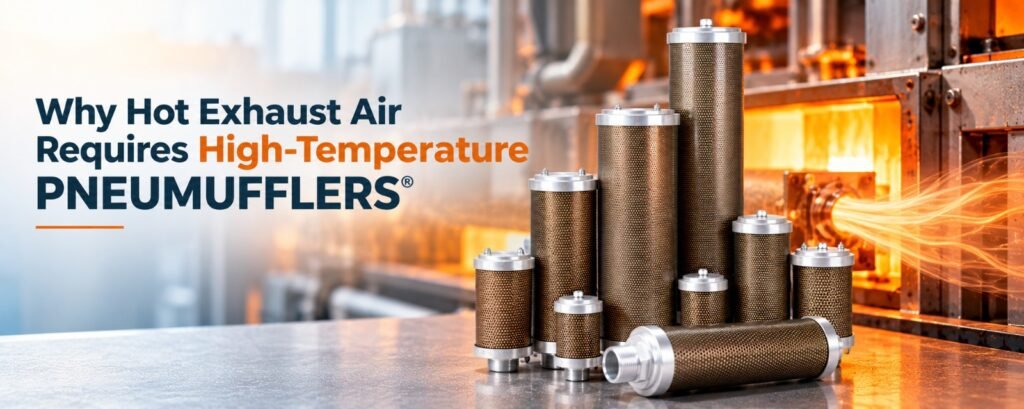
A High Temperature Pneumuffler is designed for pneumatic exhaust applications where operating temperatures may exceed the limits of conventional silencers. In many industrial facilities, compressed-air exhaust is assumed to be close to ambient temperature. However, actual operating conditions can vary significantly depending on the equipment, process and location. Pneumatic components may operate near heated machinery, […]
Why Brass Y Strainers Clog After Pipeline Commissioning
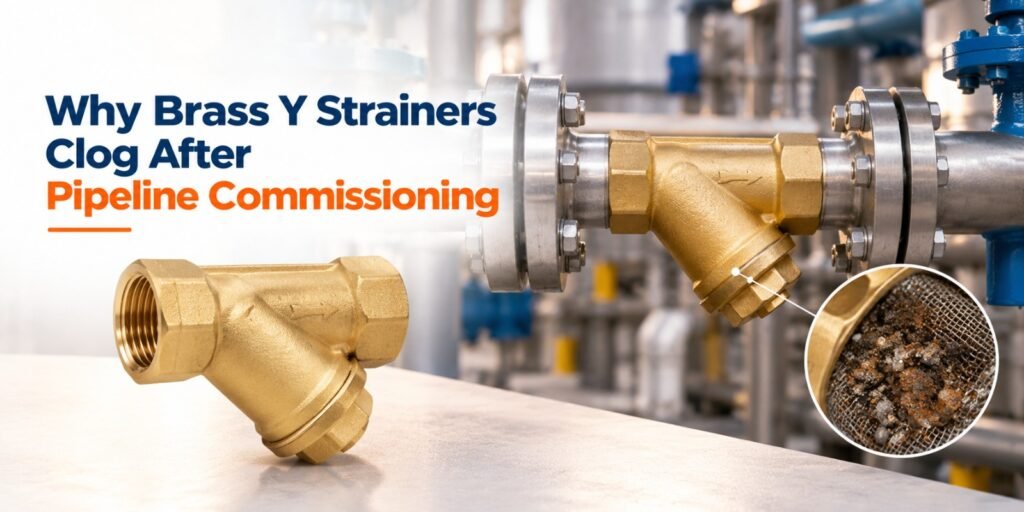
A newly installed pipeline is expected to operate smoothly once commissioning is complete. However, one common problem during initial operation is the unexpected clogging of a Brass Y Strainer. Even when a pipeline is new, it may contain welding particles, metal shavings, rust, sand, sealing material and other installation debris. When fluid begins flowing through […]
Why Filter Surface Area Matters When Designing Sintered Bronze Filter Elements

In industrial filtration, selecting the correct filter is not only about choosing the right material or micron rating. Another important factor is the surface area available for filtration. Sintered bronze filter surface area influences how easily air, gas, or liquid passes through a filter element. It also affects contaminant loading, pressure drop, maintenance frequency, and […]
How Oil-Lubricated Compressed Air Creates Sticky Deposits Inside Pneumufflers
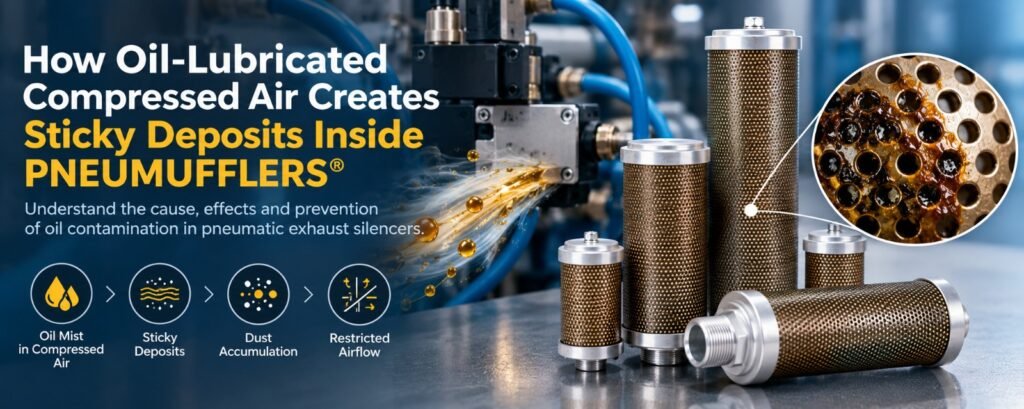
A Pneumuffler is an important component in pneumatic systems where compressed air must be released safely and with controlled noise levels. It helps reduce the sharp sound produced when compressed air exits pneumatic valves, cylinders and other equipment. However, a Pneumuffler can gradually lose its effectiveness when contaminants accumulate inside its porous structure. One commonly […]
Why Air Bypass Around an AHU Panel Filter Can Be Worse Than a Dirty Filter
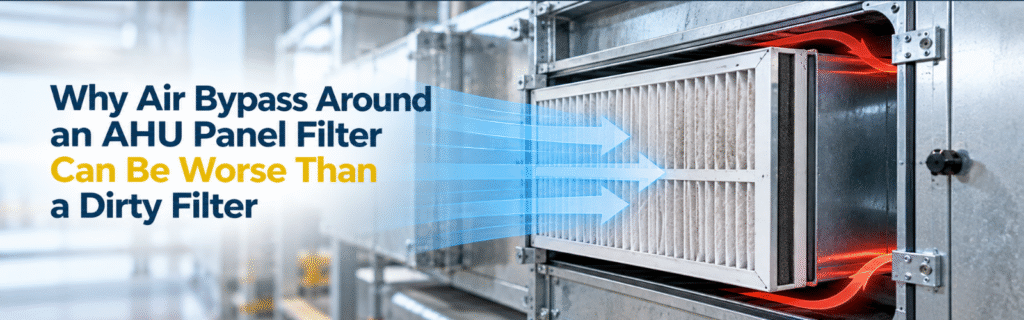
When maintenance teams inspect an AHU Panel Filter, a dirty filter immediately attracts attention. Dust is visible on the surface. Airflow may begin to reduce. Differential pressure may rise. The obvious solution is to clean or replace the filter. But what happens when the filter looks surprisingly clean while dust continues accumulating inside the Air […]
Why Coalescing Filters Struggle with Sudden Liquid Slugs in Compressed Air Systems
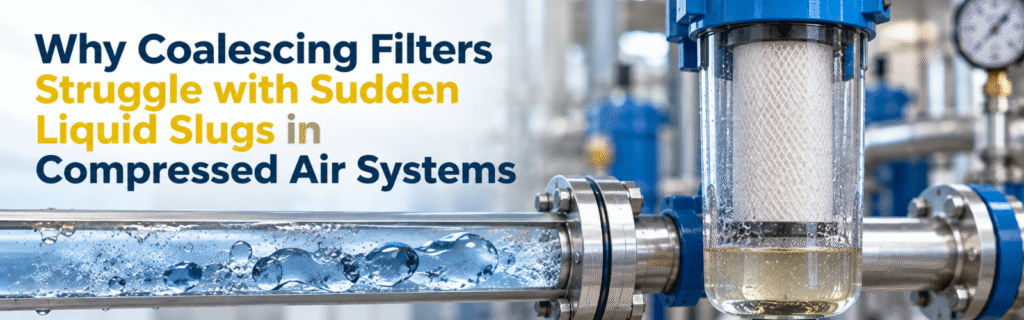
A Compressed Air Coalescing Filter is designed to remove fine liquid aerosols from compressed air. Tiny oil and water droplets enter the filter element, combine into larger droplets and drain away from the airflow. Under normal operating conditions, this process provides effective contamination control. But there is an important difference between handling fine aerosols and […]
Why Brass Y Strainer Screen Area Matters More Than Pipe Size
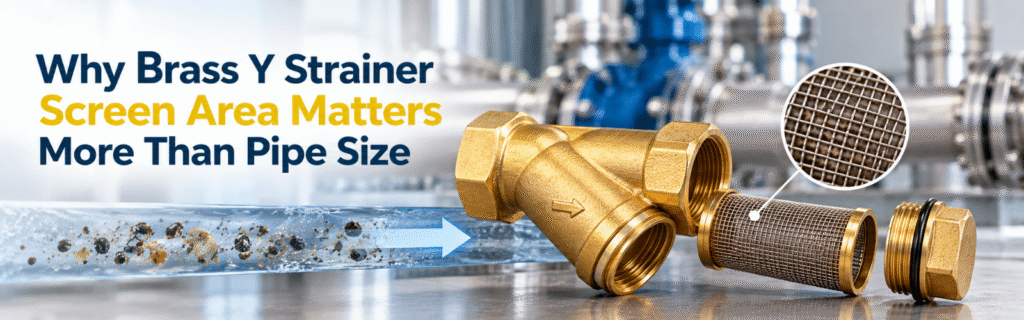
When selecting a Brass Y Strainer, pipe size is usually the first specification engineers look at. A 1-inch pipeline needs a 1-inch strainer. A 2-inch pipeline needs a 2-inch strainer. That is necessary—but it does not tell you how effectively the strainer will perform. Inside every Y strainer is a screen responsible for capturing rust, […]
How Salt, Humidity and Corrosion Affect Pneumatic Exhaust Silencers in Marine Applications
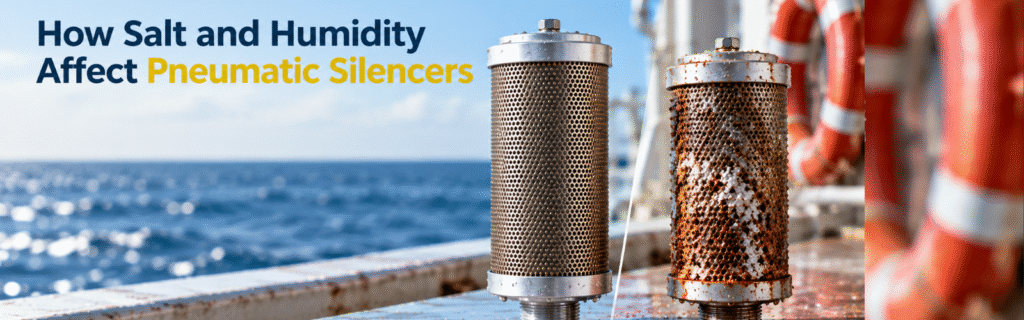
Pneumatic equipment used in marine environments operates under conditions very different from equipment installed inside a clean factory. Ships, ports, offshore equipment and coastal industrial facilities are constantly exposed to high humidity, salt-laden air and moisture. These conditions affect everything from electrical connections to metal components—and the Pneumatic Exhaust Silencer is no exception. A Pneumuffler […]
Why Condensate Inside Pneumatic Exhaust Lines Can Prematurely Block Pneumufflers
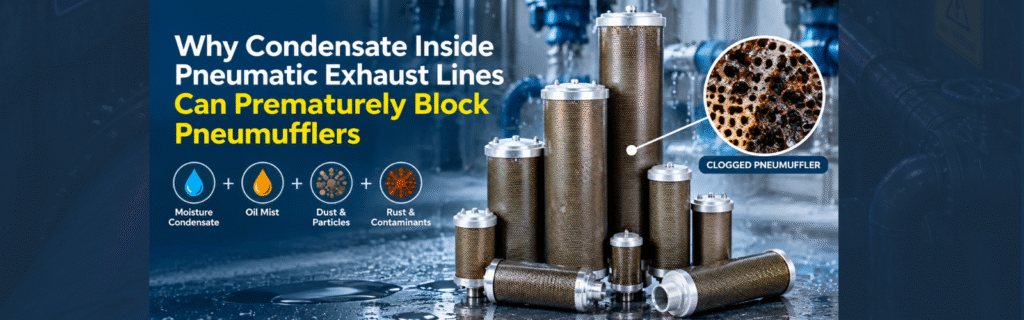
A Pneumuffler may look like a simple component fitted to a pneumatic valve exhaust port, but its operating condition can directly influence how efficiently compressed air leaves the system. Most maintenance teams know that dust, oil and other contaminants can eventually clog a pneumatic silencer. Moisture is often overlooked. Compressed air naturally contains water vapor. […]
How Paint Mist and Overspray Can Clog Pneumatic Exhaust Silencers in Spray Painting Systems
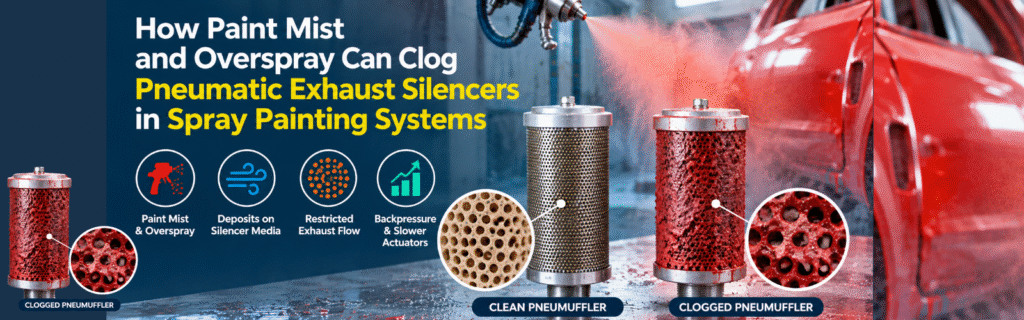
Spray painting systems depend on compressed air for much more than atomizing paint. Pneumatic cylinders, control valves, actuators and other air-operated components may work continuously around the spray booth or coating line. Every time these components operate, compressed air must also be exhausted. A Pneumatic Exhaust Silencer helps control the sharp noise created when this […]