

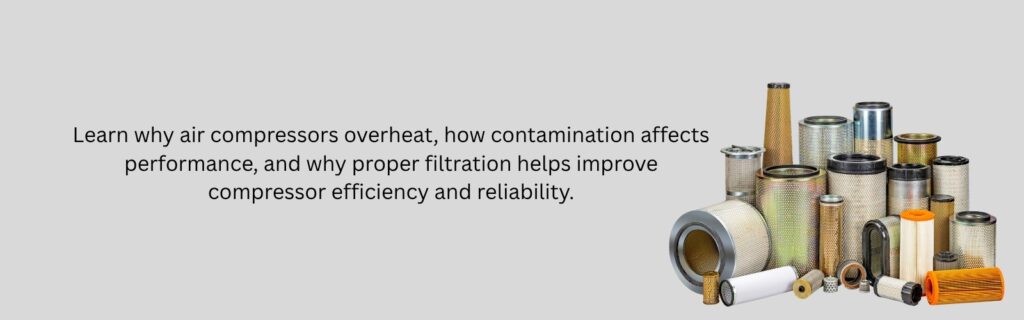
Air compressors are among the hardest-working machines in any industrial facility. Whether powering pneumatic tools, automation systems, packaging lines, CNC machines, or process equipment, compressors often operate for long hours under demanding conditions.
Despite their robust design, one common issue affects compressors across industries:
Overheating.
Many maintenance teams initially blame:
- compressor age
- ambient temperature
- continuous operation
- cooling system problems
While these factors can contribute, the real cause is often linked to airflow and contamination.
This is where Air Compressor Filters play a critical role.
Proper filtration not only protects internal compressor components but also helps maintain airflow, reduce operating stress, and improve temperature control.
Why Compressor Temperature Matters
Every compressor generates heat during compression.
As air is compressed:
- temperature rises
- mechanical friction increases
- moving parts generate heat
A properly functioning compressor manages this heat efficiently.
However, when operating temperatures become excessive, problems begin to appear.
Overheating can lead to:
- reduced efficiency
- increased energy consumption
- premature component wear
- oil degradation
- unexpected downtime
Preventing excessive heat is essential for long-term compressor reliability.
How Air Compressors Stay Cool
Compressors rely on several systems to control temperature:
- cooling fans
- heat exchangers
- lubricating oil
- airflow management
- filtration systems
When all systems work together, heat is removed effectively.
If one area becomes restricted, temperature begins to rise.
The Hidden Role of Air Compressor Filters
Many operators view filtration only as a way to stop dirt.
In reality, Air Compressor Filters influence:
- airflow efficiency
- cooling performance
- compressor loading
- energy consumption
A clean filtration system allows the compressor to breathe properly.
A contaminated filtration system forces the compressor to work harder.
How Dirty Filters Cause Overheating
One of the most common causes of compressor overheating is restricted airflow.
As filters collect contamination:
- airflow resistance increases
- intake vacuum rises
- compressor loading increases
The compressor must work harder to draw air through the filter.
This additional workload generates more heat.
Over time, operating temperature continues to rise.
Why Industrial Environments Make It Worse
Industrial facilities often contain:
- dust
- metal particles
- fibers
- airborne debris
- process contaminants
These contaminants accumulate inside Air Compressor Filters much faster than many operators expect.
Industries such as:
- cement manufacturing
- metal fabrication
- woodworking
- textiles
- construction materials
experience especially high filter loading rates.
Without proper filtration management, overheating becomes increasingly likely.
How Contamination Affects Compressor Efficiency
When contamination enters the system:
- airflow decreases
- cooling efficiency drops
- internal wear increases
The compressor compensates by consuming more energy.
As a result:
- electricity costs increase
- operating temperatures rise
- maintenance frequency increases
This makes filtration a performance issue, not just a cleanliness issue.
Oil Degradation and Heat Build-Up
Compressors depend on oil for:
- lubrication
- cooling
- sealing
Excessive heat causes oil to degrade faster.
Degraded oil leads to:
- reduced lubrication
- carbon deposits
- sludge formation
- increased friction
This creates even more heat.
The cycle continues until performance declines significantly.
Proper Air Compressor Filters help reduce the conditions that accelerate oil breakdown.
Why Restricted Cooling Airflow Creates Problems
Many compressors rely on cooling airflow around:
- radiators
- heat exchangers
- oil coolers
Dust accumulation can restrict these cooling surfaces.
When cooling efficiency drops:
- internal temperatures increase
- compressor load rises
- thermal stress develops
Filtration helps reduce contamination reaching critical cooling components.
The Connection Between Pressure Drop and Heat
Pressure drop is a hidden contributor to overheating.
As filters become clogged:
- airflow restriction increases
- pressure losses occur
- compressor workload rises
Even small increases in pressure drop can significantly impact operating temperature.
Maintaining efficient Air Compressor Filters helps reduce pressure-related heat generation.
Common Signs of Compressor Overheating
Watch for:
- unusually high discharge temperatures
- frequent shutdowns
- increased energy consumption
- reduced airflow output
- burnt oil smell
- excessive maintenance requirements
These symptoms often indicate airflow or filtration problems.
Why Preventive Filtration Is Better Than Reactive Repairs
Waiting until a compressor overheats can be costly.
Overheating can damage:
- bearings
- rotors
- seals
- lubricants
- cooling systems
Replacing these components is far more expensive than maintaining filtration systems.
Preventive maintenance helps avoid major failures.
Real Example: Manufacturing Plant Compressor Issue
A manufacturing facility experienced:
- rising compressor temperatures
- increased energy costs
- repeated thermal shutdowns
Initial inspections focused on cooling systems.
However, the actual problem was heavily loaded intake filtration.
After replacing the filtration system:
- airflow improved
- operating temperature decreased
- energy efficiency improved
- shutdowns stopped
The solution was simple but highly effective.
Why MMHP Filtration Solutions Help
MMHP India provides industrial filtration solutions designed for demanding operating environments.
Their filtration products help:
- maintain airflow
- reduce contamination
- improve equipment reliability
- support efficient operation
For industrial users, maintaining clean airflow is critical to compressor performance.
How Better Filtration Improves Compressor Life
When airflow remains unrestricted:
- compressors run cooler
- components experience less stress
- oil lasts longer
- maintenance requirements decrease
This improves overall equipment life.
Effective Air Compressor Filters support both performance and reliability.
Best Practices to Prevent Compressor Overheating
To reduce overheating risks:
Inspect Filters Regularly
Monitor contamination levels and replace filters as required.
Monitor Temperature Trends
Track operating temperatures before problems develop.
Keep Cooling Surfaces Clean
Remove dust from heat exchangers and coolers.
Use Quality Filtration Products
High-quality filtration improves airflow consistency.
Follow Maintenance Schedules
Preventive maintenance reduces unexpected failures.
Why MMHP Is the Best Choice
MMHP India understands the challenges industrial facilities face when maintaining compressed air systems.
Their filtration solutions are designed to:
- support airflow efficiency
- reduce contamination
- improve equipment reliability
- perform in demanding environments
By focusing on practical industrial performance, MMHP helps customers improve system efficiency while reducing maintenance issues.
Final Conclusion
Air compressor overheating is often treated as a cooling problem, but in many cases the root cause is airflow restriction and contamination.
Dirty filters increase workload, reduce cooling efficiency, and force compressors to operate under higher stress.
That is why Air Compressor Filters are critical for maintaining temperature control and protecting compressor performance.
MMHP India provides industrial filtration solutions that help compressors run cleaner, cooler, and more efficiently.
For facilities focused on reliability, energy efficiency, and long-term equipment life, proper filtration is one of the smartest investments they can make.