

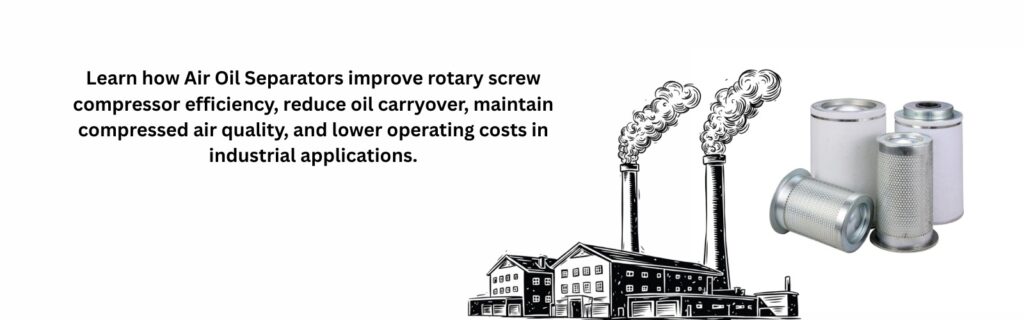
Compressed air is often called the fourth utility in modern industries because almost every manufacturing facility depends on it. From powering pneumatic cylinders and automation systems to operating packaging machines, CNC equipment, and process machinery, compressed air plays an essential role in keeping production running smoothly.
At the heart of many compressed air systems is the rotary screw compressor. These compressors are known for their ability to deliver a continuous supply of compressed air with high efficiency and reliability.
However, maintaining this performance requires more than just a powerful compressor.
One of the most important components inside a rotary screw compressor is the Air Oil Separator.
Although it is often overlooked during routine maintenance, the separator plays a critical role in maintaining compressed air quality, reducing oil consumption, improving energy efficiency, and protecting downstream equipment.
A failing separator can lead to excessive oil carryover, contaminated compressed air, increased operating costs, and reduced compressor efficiency.
This is why selecting high-quality Air Oil Separators and replacing them at the correct intervals is essential for every compressed air system.
In this article, we will explore how Air Oil Separators work, why they are important, common causes of failure, and how they help industries improve compressor performance while reducing long-term maintenance costs.
Understanding Rotary Screw Compressors
Before understanding the role of Air Oil Separators, it is important to understand how rotary screw compressors work.
Unlike reciprocating compressors, rotary screw compressors use two precisely machined helical rotors that rotate together inside the compressor housing.
As these rotors rotate:
- Air enters the compression chamber.
- The air becomes trapped between the rotors.
- The trapped air volume gradually decreases.
- Pressure increases until compressed air exits the compressor.
This continuous compression process allows rotary screw compressors to provide a steady supply of compressed air with minimal pulsation.
Their smooth operation makes them ideal for:
- Manufacturing plants
- Packaging industries
- Pharmaceutical production
- Automotive manufacturing
- Textile industries
- Food processing
- Chemical plants
However, one important factor distinguishes oil-injected rotary screw compressors from many other compressor designs.
They require oil during the compression process.
Why Oil Is Used Inside Rotary Screw Compressors
Many people assume compressor oil is used only for lubrication.
In reality, compressor oil performs several critical functions simultaneously.
It helps to:
- Lubricate moving components
- Seal the compression chamber
- Absorb heat generated during compression
- Reduce internal wear
- Improve compressor efficiency
Without oil, the compressor would experience:
- Excessive friction
- Higher operating temperatures
- Increased component wear
- Reduced efficiency
Oil therefore plays an essential role in maintaining compressor reliability.
However, once compression is complete, the oil must be separated from the compressed air before it reaches downstream equipment.
This is where Air Oil Separators become indispensable.
Why Oil Separation Is Necessary
After compression, the compressed air leaving the compressor contains a mixture of:
- Compressed air
- Fine oil droplets
- Oil mist
- Lubricating oil vapour
If this oil is allowed to travel through the compressed air system, several problems occur.
Oil contamination can affect:
- Pneumatic cylinders
- Directional control valves
- Air tools
- Instrumentation
- Process equipment
- Product quality
Industries such as pharmaceuticals, food processing, electronics, and automotive manufacturing require clean compressed air for reliable production.
Removing oil before the air enters the distribution system is therefore essential.
This is the primary responsibility of Air Oil Separators.
What Are Air Oil Separators?
An Air Oil Separator is a filtration component installed inside oil-injected rotary screw compressors.
Its purpose is to separate lubricating oil from compressed air before the air leaves the compressor.
Rather than allowing valuable compressor oil to escape into the compressed air system, the separator captures the oil and returns it to the compressor lubrication circuit.
This provides two major advantages:
- Clean compressed air
- Reduced oil consumption
Because compressor oil is continuously recycled, Air Oil Separators help improve both operating efficiency and equipment reliability.
How Air Oil Separators Work
Although the separator appears simple from the outside, its internal operation is carefully engineered.
The separation process typically occurs in multiple stages.
Stage 1 – Initial Separation
After compression, the air-oil mixture enters the separator vessel.
At this stage, larger oil droplets lose velocity and naturally settle due to gravity.
These larger droplets return directly to the oil reservoir.
Stage 2 – Fine Oil Mist Separation
Smaller oil droplets remain suspended within the compressed air.
These droplets pass through the separator element.
Inside the element, microscopic fibres capture the oil mist.
As tiny droplets combine into larger droplets, they become heavy enough to drain back into the compressor sump.
Stage 3 – Clean Air Delivery
Once the oil has been removed, clean compressed air exits the compressor and flows toward:
- Air receivers
- Dryers
- Filters
- Pneumatic equipment
- Industrial process machinery
This ensures downstream equipment receives significantly cleaner compressed air.
Why Air Oil Separators Are Critical
Without effective Air Oil Separators, compressor performance declines rapidly.
Several important functions depend directly on efficient oil separation.
Maintaining Compressed Air Quality
Clean compressed air is essential for modern industries.
Oil contamination can affect:
- Product quality
- Pneumatic equipment
- Sensitive instruments
- Manufacturing processes
Properly functioning Air Oil Separators significantly reduce oil carryover, helping maintain cleaner compressed air throughout the system.
Reducing Compressor Oil Consumption
Every litre of compressor oil that escapes into the compressed air system must eventually be replaced.
Poor oil separation increases operating costs through:
- Higher oil consumption
- More frequent maintenance
- Increased environmental waste
Efficient Air Oil Separators recover most of the oil, allowing it to be reused inside the compressor.
This improves both operating efficiency and maintenance economy.
Supporting Compressor Efficiency
Oil carryover affects more than air quality.
As separator performance declines:
- Pressure drop increases.
- Compressor workload rises.
- Energy consumption increases.
Efficient Air Oil Separators help maintain stable airflow while minimizing unnecessary pressure losses.
This allows the compressor to operate closer to its designed efficiency.
Protecting Downstream Equipment
Compressed air often powers expensive equipment throughout the plant.
Oil contamination can damage:
- Pneumatic valves
- Actuators
- Air cylinders
- Solenoid valves
- Process instrumentation
By reducing oil carryover, Air Oil Separators help extend the service life of downstream pneumatic components.
Signs Your Air Oil Separators Need Replacement
Like any filtration component, Air Oil Separators gradually lose efficiency as they accumulate contaminants and operate under varying pressure and temperature conditions. Ignoring these warning signs can reduce compressor efficiency and increase operating costs.
Here are the most common indicators that your Air Oil Separators require inspection or replacement.
1. Excessive Oil Carryover
One of the clearest signs of a failing separator is excessive oil in the compressed air system.
You may notice:
- Oil residue in air pipelines
- Oil collecting inside air receivers
- Oily discharge at pneumatic equipment
- Contamination of finished products
High-quality Air Oil Separators are designed to minimize oil carryover. If oil contamination suddenly increases, the separator should be inspected immediately.
2. Increased Pressure Drop
As the separator element becomes saturated with contaminants, airflow through the media becomes more restricted.
This results in:
- Higher differential pressure
- Reduced compressor efficiency
- Increased energy consumption
- Additional load on the compressor motor
Even a small increase in pressure drop can significantly affect operating costs over time.
3. Higher Oil Consumption
If compressor oil levels require frequent topping up, the separator may no longer be recovering oil effectively.
Instead of returning lubricating oil to the compressor, damaged or clogged Air Oil Separators allow more oil to leave with the compressed air.
This not only increases oil costs but also reduces lubrication within the compressor.
4. Reduced Air Quality
Industries that depend on clean compressed air often notice declining air quality when separators begin to fail.
Poor separation may result in:
- Oil-contaminated compressed air
- Reduced product quality
- Equipment contamination
- Increased downstream filter loading
Maintaining efficient Air Oil Separators helps preserve compressed air quality throughout the system.
5. Rising Compressor Operating Temperature
Restricted airflow increases the workload on the compressor.
This can lead to:
- Higher discharge temperatures
- Reduced cooling efficiency
- Increased stress on compressor components
Replacing worn Air Oil Separators helps restore proper airflow and supports normal operating temperatures.
Common Causes of Air Oil Separator Failure
Although separators are designed for long service life, several operating conditions can shorten their lifespan.
Understanding these causes helps improve maintenance planning and compressor reliability.
Poor Maintenance Practices
Skipping scheduled maintenance allows contaminants to accumulate inside the separator.
Over time, this increases pressure drop and reduces separation efficiency.
Routine servicing ensures Air Oil Separators continue performing as intended.
Low-Quality Compressor Oil
The quality of compressor oil directly affects separator performance.
Poor-quality oil may:
- Break down faster
- Produce excessive carbon deposits
- Increase contamination inside the separator
Using the recommended lubricant helps maximize separator life.
Operating at Excessive Temperatures
High operating temperatures accelerate the ageing of separator media.
Continuous overheating may:
- Damage filter material
- Reduce oil separation efficiency
- Increase pressure drop
Maintaining proper cooling improves the performance of Air Oil Separators.
Incorrect Installation
Improper installation may result in:
- Air bypass
- Oil leakage
- Poor sealing
- Reduced filtration efficiency
Following manufacturer installation guidelines helps ensure reliable operation.
Delayed Replacement
Many facilities continue using separators beyond their recommended service interval.
Although the compressor may continue operating, separator performance gradually declines.
Replacing Air Oil Separators before severe restriction develops helps maintain optimum compressor performance.
Benefits of High-Quality Air Oil Separators
Choosing premium-quality Air Oil Separators provides benefits far beyond cleaner compressed air.
Improved Compressor Efficiency
Efficient oil separation reduces pressure losses inside the compressor.
Lower restriction allows the compressor to operate with less energy.
Lower Oil Consumption
Recovering more oil means less makeup oil is required.
This reduces operating expenses and minimizes lubricant waste.
Cleaner Compressed Air
Industries requiring high air quality benefit from reduced oil carryover.
Cleaner air protects downstream equipment while improving product quality.
Longer Compressor Life
By maintaining proper lubrication and reducing internal contamination, Air Oil Separators contribute to longer compressor service life.
Lower Maintenance Costs
Efficient separators reduce contamination throughout the compressed air system.
This helps extend the life of:
- Air dryers
- Line filters
- Pneumatic valves
- Cylinders
- Air tools
The result is lower overall maintenance costs.
Industrial Applications of Air Oil Separators
Because rotary screw compressors are used in almost every manufacturing sector, Air Oil Separators play an important role across many industries.
Automotive Manufacturing
Provide clean compressed air for assembly lines, pneumatic tools, and robotic systems.
Food & Beverage Industry
Help maintain compressed air quality for packaging, conveying, and processing equipment.
Pharmaceutical Manufacturing
Support contamination control where compressed air comes into contact with production processes.
Textile Industry
Supply cleaner compressed air for weaving, spinning, and pneumatic automation.
Packaging Industry
Improve the reliability of high-speed packaging equipment powered by compressed air.
General Manufacturing
Protect compressors and pneumatic systems across a wide range of industrial applications.
Real Industrial Example
A manufacturing plant operating multiple rotary screw compressors experienced rising compressor oil consumption and increasing maintenance costs.
Initially, technicians suspected oil leaks and excessive compressor wear.
However, after inspection, they discovered that several Air Oil Separators had exceeded their recommended service life.
The saturated separator elements were allowing excessive oil carryover while creating higher internal pressure drop.
After replacing the separators with properly specified units, the plant reported:
- Reduced oil consumption
- Improved compressed air quality
- Lower compressor discharge temperatures
- Reduced pressure drop
- More stable compressor performance
This demonstrated how a relatively small maintenance component can have a significant impact on overall compressor efficiency.
Best Practices for Maintaining Air Oil Separators
To maximize the performance and service life of Air Oil Separators, follow these maintenance practices:
- Inspect separators during scheduled compressor servicing.
- Monitor differential pressure across the separator.
- Use high-quality compressor oil recommended for the equipment.
- Replace separator elements according to operating hours or pressure-drop limits.
- Check seals and gaskets during replacement.
- Keep compressor cooling systems clean to prevent overheating.
- Record maintenance history to optimize replacement intervals.
A proactive maintenance approach helps ensure reliable compressor performance while reducing operating costs.
How to Choose the Right Air Oil Separators
Selecting the right Air Oil Separators is essential for maintaining compressor efficiency, protecting downstream equipment, and reducing operating costs. While separator elements may appear similar, they are designed to meet specific compressor operating conditions.
Here are the key factors to consider when selecting Air Oil Separators.
1. Compressor Compatibility
Always ensure the separator is compatible with the compressor model and operating specifications.
Using an incorrect separator can result in:
- Poor oil separation
- Higher pressure drop
- Increased oil carryover
- Reduced compressor efficiency
Selecting the correct Air Oil Separators helps maintain the performance originally intended by the compressor manufacturer.
2. Separation Efficiency
The primary purpose of Air Oil Separators is to remove oil from compressed air while allowing unrestricted airflow.
High-quality separators provide:
- Excellent oil removal efficiency
- Stable airflow
- Lower oil carryover
- Improved compressed air quality
Better separation efficiency means cleaner compressed air and reduced lubricant consumption.
3. Pressure Drop
Pressure drop is one of the most important performance characteristics.
A separator with excessive restriction forces the compressor to work harder.
This results in:
- Higher electricity consumption
- Increased operating temperature
- Lower compressor output
Quality Air Oil Separators are designed to maintain low pressure drop throughout their service life.
4. Operating Conditions
Consider the compressor’s operating environment.
Factors such as:
- Continuous operation
- High ambient temperatures
- Dusty surroundings
- Heavy-duty industrial applications
can affect separator life.
Selecting Air Oil Separators suitable for these conditions improves long-term reliability.
5. Maintenance Requirements
The ideal separator should offer:
- Easy installation
- Reliable sealing
- Long service intervals
- Consistent performance
Routine replacement of Air Oil Separators helps maintain compressor efficiency while minimizing unexpected downtime.
Best Practices for Maximizing Separator Life
Proper maintenance extends the life of both the separator and the compressor.
Use Recommended Compressor Oil
High-quality compressor oil reduces carbon formation and contamination inside the separator.
Clean oil helps Air Oil Separators perform efficiently for longer periods.
Replace Air Filters on Time
Dirty intake air introduces additional contaminants into the compressor.
Maintaining clean intake filtration reduces the load on Air Oil Separators.
Monitor Pressure Differential
A gradual increase in pressure drop indicates separator loading.
Monitoring differential pressure helps identify the optimum replacement interval.
Avoid Compressor Overheating
High temperatures accelerate separator deterioration.
Maintaining proper cooling improves separator performance and compressor reliability.
Follow Scheduled Maintenance
Waiting until separator failure occurs often leads to:
- Higher oil consumption
- Increased energy costs
- Reduced compressor performance
Replacing Air Oil Separators during planned maintenance helps avoid these problems.
Why MMHP Air Oil Separators?
At MMHP India, we understand that compressed air systems are expected to operate efficiently, reliably, and continuously.
Our Air Oil Separators are designed to help industries achieve cleaner compressed air while improving compressor performance and reducing operating costs.
MMHP focuses on delivering filtration solutions that support:
- Efficient oil separation
- Stable airflow
- Low pressure drop
- Long service life
- Reliable compressor performance
- Easy replacement and maintenance
Whether used in manufacturing plants, process industries, automotive facilities, pharmaceutical production, food processing, or general industrial applications, MMHP Air Oil Separators help maintain compressor efficiency while protecting downstream equipment.
Why Choose MMHP?
Compressed air systems represent a significant investment, and maintaining their performance requires dependable filtration components.
MMHP India offers industrial filtration solutions designed to meet the demands of modern manufacturing and process industries.
Customers choose MMHP because our products provide:
✔ High separation efficiency
✔ Low pressure drop
✔ Reliable compressed air quality
✔ Long operational life
✔ Consistent performance under industrial conditions
✔ Easy installation and maintenance
With years of expertise in industrial filtration, MMHP continues to supply solutions that help businesses improve productivity while lowering maintenance and energy costs.
Conclusion
A rotary screw compressor can only perform as efficiently as the components that support it.
Among these components, Air Oil Separators play one of the most important roles in maintaining compressor efficiency, protecting downstream equipment, and ensuring high-quality compressed air.
By effectively separating oil from compressed air, they reduce oil carryover, lower lubricant consumption, minimize pressure drop, and improve the overall reliability of the compressed air system.
Ignoring separator maintenance can result in higher energy consumption, poor air quality, increased compressor wear, and expensive downtime.
Regular inspection and timely replacement of Air Oil Separators help maximize compressor performance while reducing long-term operating costs.
MMHP India provides Air Oil Separators engineered to meet the demands of industrial applications where efficiency, durability, and consistent performance are essential.
Choosing the right separator today means cleaner compressed air, better compressor reliability, and lower maintenance costs for years to come.
Frequently Asked Questions (FAQs)
1. What is the function of an Air Oil Separator?
An Air Oil Separator separates lubricating oil from compressed air inside an oil-injected rotary screw compressor, allowing clean compressed air to exit while returning the oil to the compressor lubrication system.
2. How do I know if my Air Oil Separator needs replacement?
Common signs include:
- Increased oil carryover
- Higher oil consumption
- Increased pressure drop
- Reduced compressor efficiency
- Poor compressed air quality
- Higher operating temperatures
3. How often should Air Oil Separators be replaced?
Replacement intervals depend on compressor operating hours, load conditions, maintenance practices, and pressure-drop readings. Always follow the compressor manufacturer’s maintenance recommendations and inspect separators during scheduled servicing.
4. Can a blocked Air Oil Separator increase electricity consumption?
Yes. A clogged separator creates additional pressure drop, forcing the compressor to work harder. This increases energy consumption and reduces overall compressor efficiency.
5. Which industries commonly use Air Oil Separators?
Air Oil Separators are widely used in:
- Manufacturing plants
- Automotive industries
- Food & beverage processing
- Pharmaceutical manufacturing
- Textile industries
- Packaging facilities
- Chemical processing
- General industrial compressed air systems