Hydraulic systems are the backbone of modern industrial machinery. They power construction equipment, injection moulding machines, presses, machine tools, mining equipment, agricultural machinery, material handling systems, and countless other industrial applications.
Although hydraulic systems are designed to operate under high pressure and demanding conditions, their performance depends on one critical factor that is often overlooked—hydraulic oil cleanliness.
Many equipment failures are not caused by worn pumps or defective valves. Instead, they begin with microscopic contamination circulating through the hydraulic oil.
Tiny particles that are invisible to the naked eye can gradually damage pumps, servo valves, proportional valves, cylinders, bearings, and hydraulic motors. Over time, this contamination reduces efficiency, increases maintenance costs, and leads to expensive equipment failures.
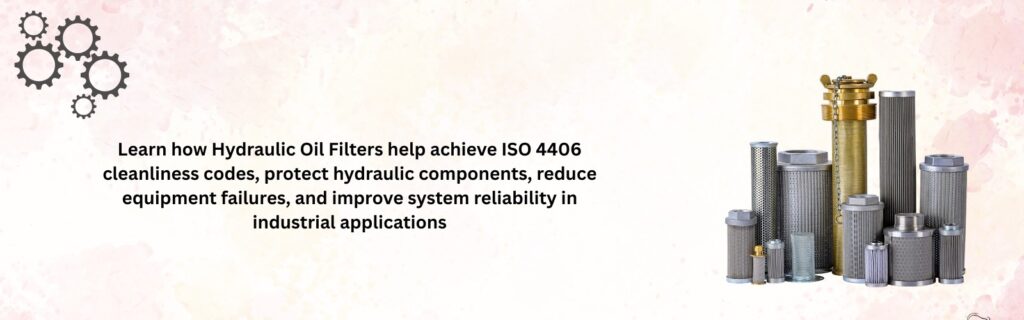
To control contamination, industries rely on Hydraulic Oil Filters.
However, selecting the right filter is not simply a matter of choosing a micron rating.
Engineers increasingly use ISO 4406 Cleanliness Codes to determine how clean hydraulic oil must be for a particular application.
Understanding this international cleanliness standard helps maintenance teams choose Hydraulic Oil Filters that provide the required level of contamination control while improving equipment reliability and extending component life.
In this article, we’ll explain how ISO 4406 works, why it matters, and how selecting the right Hydraulic Oil Filters can significantly improve hydraulic system performance.
Why Hydraulic Oil Cleanliness Matters
Hydraulic oil performs much more than a lubrication function.
It is responsible for:
- Transmitting hydraulic power
- Lubricating moving components
- Removing heat
- Protecting against corrosion
- Reducing wear
- Supporting smooth machine operation
As hydraulic oil circulates continuously through the system, it also carries contaminants.
If these contaminants are not removed, they travel through every hydraulic component.
This affects:
- Hydraulic pumps
- Servo valves
- Directional control valves
- Hydraulic cylinders
- Hydraulic motors
- Pressure control valves
This is why properly selected Hydraulic Oil Filters are essential for maintaining hydraulic system cleanliness.
The Hidden Cost of Hydraulic Contamination
Hydraulic contamination is responsible for a large percentage of equipment failures worldwide.
Common consequences include:
- Premature pump wear
- Valve sticking
- Internal leakage
- Reduced machine accuracy
- Increased energy consumption
- Higher maintenance costs
- Unexpected downtime
Many of these failures develop gradually.
By the time symptoms appear, expensive components may already require repair or replacement.
Using high-quality Hydraulic Oil Filters helps minimize these risks by continuously removing harmful particles from the circulating oil.
What Is ISO 4406?
ISO 4406 is an internationally recognized standard used to measure the cleanliness level of hydraulic fluids.
Instead of describing oil as simply “clean” or “dirty,” ISO 4406 provides a numerical code that represents the concentration of solid particles within the hydraulic oil.
This allows engineers to:
- Measure contamination accurately
- Compare cleanliness levels
- Establish maintenance targets
- Select appropriate Hydraulic Oil Filters
- Monitor filtration performance over time
The standard provides a common language for hydraulic system cleanliness across industries worldwide.
How ISO 4406 Works
ISO 4406 measures the number of particles present in a specific volume of hydraulic oil.
The cleanliness code is expressed using three numbers.
For example:
18/16/13
Each number represents the concentration of particles larger than specific sizes.
Although the exact particle counting process is performed using specialized equipment, the important point for maintenance engineers is that:
- Lower ISO numbers indicate cleaner oil.
- Higher ISO numbers indicate greater contamination.
The objective of Hydraulic Oil Filters is to help maintain the cleanliness level recommended by equipment manufacturers.
Why Hydraulic Contamination Happens
Even newly installed hydraulic systems are not completely free from contamination.
Particles enter hydraulic oil from many different sources.
Manufacturing Residue
During manufacturing, small particles such as:
- Metal chips
- Burrs
- Welding residue
may remain inside components.
Assembly Contamination
Dust and dirt may enter the system during equipment assembly.
External Dust
Machines operating in construction, mining, agriculture, or manufacturing environments continuously encounter airborne contamination.
Component Wear
As pumps, cylinders, and valves operate, microscopic wear particles are naturally generated.
Maintenance Activities
Opening hydraulic systems during servicing may introduce additional contamination.
Without effective Hydraulic Oil Filters, these particles continue circulating throughout the hydraulic system.
How Contamination Damages Hydraulic Systems
The damage caused by contamination depends on particle size, concentration, and the sensitivity of the hydraulic components.
Pump Wear
Hydraulic pumps operate with extremely close internal clearances.
Fine particles gradually erode:
- Gear teeth
- Pistons
- Vanes
- Bearings
This reduces pump efficiency while increasing internal leakage.
Valve Failure
Modern servo and proportional valves contain extremely precise internal passages.
Small contaminants may:
- Block passages
- Cause spool sticking
- Reduce positioning accuracy
Maintaining clean oil with Hydraulic Oil Filters helps protect these sensitive components.
Cylinder Damage
Contaminated oil accelerates seal wear.
Damaged seals may lead to:
- Internal leakage
- Reduced lifting capacity
- Slower actuator response
Bearing Wear
Particles suspended in hydraulic oil increase friction between moving components.
This shortens bearing life while increasing heat generation.
Why Hydraulic Oil Filters Are Essential
Hydraulic systems continuously circulate oil.
Without continuous filtration, contamination would increase rapidly.
Hydraulic Oil Filters perform several important functions:
- Remove harmful solid particles
- Protect precision hydraulic components
- Extend equipment life
- Maintain oil cleanliness
- Improve system reliability
- Reduce maintenance costs
Rather than allowing contamination to accumulate, Hydraulic Oil Filters continuously clean the circulating oil during operation.
Understanding Micron Rating vs ISO 4406
One of the most common misunderstandings in hydraulic maintenance is confusing micron ratings with ISO cleanliness codes.
Although both relate to contamination control, they serve different purposes.
A micron rating describes the size of particles a filter is designed to capture.
An ISO 4406 cleanliness code measures the actual cleanliness level of the hydraulic oil after filtration.
In simple terms:
- Micron rating = Filter capability
- ISO 4406 = Oil cleanliness result
Understanding the relationship between these two concepts helps engineers select Hydraulic Oil Filters that achieve the cleanliness targets required for reliable hydraulic system operation.
Understanding the Relationship Between Micron Ratings and ISO 4406
One of the biggest misconceptions in hydraulic maintenance is assuming that selecting a lower micron filter automatically guarantees cleaner hydraulic oil.
In reality, Hydraulic Oil Filters and ISO 4406 Cleanliness Codes work together but measure two different aspects of contamination control.
A filter’s micron rating tells you the approximate particle size the filter is designed to capture.
The ISO 4406 cleanliness code tells you how clean the hydraulic oil actually is after passing through the filtration system.
For example, two hydraulic systems may both use 10-micron filters, but if one system operates in a much dirtier environment or has poor maintenance practices, its ISO cleanliness level may still be significantly worse.
This is why engineers should select Hydraulic Oil Filters based on the cleanliness target required by the hydraulic system—not simply by choosing the finest available filter.
Why Every Hydraulic System Has Different Cleanliness Requirements
Not every hydraulic application requires the same level of oil cleanliness.
A hydraulic press, for example, may tolerate a higher contamination level than a precision CNC machine equipped with servo valves.
Similarly, a mobile excavator working on a construction site faces different contamination challenges than a hydraulic system inside a pharmaceutical manufacturing plant.
The required cleanliness level depends on several factors:
- Type of hydraulic components
- Operating pressure
- System sensitivity
- Duty cycle
- Environmental conditions
- Equipment manufacturer’s recommendations
Selecting the correct Hydraulic Oil Filters ensures the hydraulic system consistently operates within its recommended cleanliness range.
Selecting the Right Hydraulic Oil Filters
Choosing the correct Hydraulic Oil Filters involves more than selecting a replacement part with matching dimensions.
Several engineering factors should be considered.
1. Understand the Application
Start by identifying the operating environment.
For example:
- Construction equipment operates in heavy dust.
- Manufacturing plants may generate metallic particles.
- Marine applications face moisture and corrosion.
- Agricultural machinery is exposed to soil and crop residue.
Understanding the operating environment helps determine the filtration requirements.
2. Match the Required Cleanliness Level
Every hydraulic system has a recommended cleanliness target.
Precision hydraulic equipment generally requires cleaner oil than heavy-duty mobile machinery.
The selected Hydraulic Oil Filters should support the cleanliness level recommended by the equipment manufacturer.
Maintaining this target helps maximize component life.
3. Choose the Correct Micron Rating
Micron rating should always be selected according to:
- Component sensitivity
- Operating pressure
- Flow rate
- Contamination levels
Choosing an unnecessarily fine filter may increase pressure drop.
Choosing an excessively coarse filter may allow harmful particles to circulate.
The objective is to achieve the desired cleanliness level while maintaining efficient system performance.
4. Consider Flow Rate
Hydraulic systems require continuous oil circulation.
The selected Hydraulic Oil Filters should accommodate the required flow rate without causing excessive restriction.
Proper flow capacity helps maintain:
- Stable pressure
- Efficient lubrication
- Consistent machine performance
5. Evaluate Pressure Conditions
Hydraulic systems operate under varying pressure conditions.
Filters should be selected according to:
- Maximum operating pressure
- Pressure surges
- System configuration
Using filters suitable for the operating pressure improves reliability and service life.
Common Mistakes When Selecting Hydraulic Oil Filters
Although hydraulic filtration appears straightforward, several common mistakes can reduce system reliability.
Selecting Filters Based Only on Price
Lower-cost filters may appear attractive initially.
However, poor filtration efficiency can result in:
- Faster component wear
- Higher maintenance costs
- Reduced equipment reliability
Investing in quality Hydraulic Oil Filters generally reduces the total cost of ownership.
Ignoring ISO Cleanliness Targets
Some maintenance teams replace filters only when they become clogged.
While this maintains oil flow, it does not necessarily maintain the required cleanliness level.
Monitoring oil cleanliness alongside filter condition provides much better contamination control.
Delaying Filter Replacement
As filters approach the end of their service life:
- Pressure drop increases.
- Filtration efficiency may decline.
- Contaminants accumulate.
Replacing Hydraulic Oil Filters according to maintenance schedules helps maintain consistent system cleanliness.
Neglecting Oil Analysis
Oil analysis provides valuable information about:
- Contamination levels
- Wear particles
- Moisture
- Oil condition
Combining oil analysis with quality Hydraulic Oil Filters creates a more effective preventive maintenance program.
Industry Applications Where Hydraulic Oil Filters Are Critical
Almost every hydraulic system benefits from effective contamination control.
Construction Equipment
Machines such as:
- Excavators
- Wheel loaders
- Cranes
- Bulldozers
operate in highly contaminated environments where Hydraulic Oil Filters protect pumps, cylinders, and valves from abrasive wear.
Injection Moulding Machines
Precision moulding equipment requires stable hydraulic performance.
Clean oil improves machine accuracy and repeatability.
Manufacturing Equipment
Hydraulic presses, machine tools, and automated production systems rely on contamination-free hydraulic oil for consistent operation.
Agricultural Machinery
Tractors, harvesters, and sprayers frequently encounter dust and debris that can contaminate hydraulic systems.
Material Handling Equipment
Forklifts, lifting platforms, and hydraulic handling systems depend on clean oil to ensure smooth operation and reduce maintenance.
Real Industrial Example
A manufacturing facility operating hydraulic presses began experiencing inconsistent machine performance.
Operators reported:
- Slower cylinder movement
- Pressure fluctuations
- Increased valve sticking
Initial inspections focused on pumps and control valves.
However, an oil analysis revealed that the hydraulic fluid consistently exceeded the recommended ISO 4406 cleanliness level.
Although filters were being replaced regularly, they were not providing the filtration efficiency required for the application.
After upgrading to properly specified Hydraulic Oil Filters and implementing routine oil cleanliness monitoring, the facility achieved:
- Improved hydraulic response
- Reduced valve failures
- Longer pump life
- Lower maintenance costs
- More stable production quality
This demonstrated that maintaining the correct cleanliness level—not simply replacing filters—was the key to improving hydraulic system reliability.
Best Practices for Maintaining Hydraulic Oil Cleanliness
Maintaining hydraulic cleanliness requires more than periodic filter replacement.
For the best results:
- Monitor hydraulic oil cleanliness regularly.
- Follow the manufacturer’s filter replacement schedule.
- Perform routine oil analysis.
- Inspect seals, breathers, and reservoirs for contamination ingress.
- Replace damaged or clogged Hydraulic Oil Filters promptly.
- Store replacement filters and hydraulic oil in clean, dry conditions.
- Train maintenance personnel on contamination control practices.
By combining good maintenance practices with high-quality Hydraulic Oil Filters, industries can significantly improve equipment reliability and reduce long-term operating costs.
How to Choose the Right Hydraulic Oil Filters for Your System
Selecting the right Hydraulic Oil Filters is one of the most important decisions in hydraulic system maintenance. The wrong filter can increase pressure drop, reduce oil flow, or fail to achieve the required cleanliness level. On the other hand, a properly selected filter protects expensive hydraulic components and significantly improves equipment reliability.
Here are the key factors to consider when selecting Hydraulic Oil Filters.
1. Understand the Hydraulic System
Every hydraulic system is designed differently.
Some applications operate under:
- High pressure
- Continuous duty
- Heavy contamination
- Precision motion control
Others may operate intermittently or under lighter loads.
Understanding the system helps determine the filtration performance required from Hydraulic Oil Filters.
2. Know the Required ISO 4406 Cleanliness Level
Equipment manufacturers often specify a target ISO 4406 cleanliness code for their hydraulic systems.
Rather than selecting a filter based only on micron size, engineers should ensure that the chosen Hydraulic Oil Filters are capable of helping maintain the required cleanliness level.
Maintaining the recommended cleanliness target helps reduce wear on pumps, valves, actuators, and hydraulic motors.
3. Select the Correct Micron Rating
Micron rating should match the sensitivity of the hydraulic components.
For example:
- Servo valves require finer filtration.
- Standard hydraulic cylinders may tolerate larger particle sizes.
- Mobile hydraulic equipment often balances filtration efficiency with higher contamination levels.
Selecting the correct Hydraulic Oil Filters ensures efficient contamination control without creating unnecessary restriction.
4. Consider Flow Rate
Hydraulic oil must circulate freely throughout the system.
A filter that restricts flow excessively can affect:
- Pump performance
- Cylinder speed
- System pressure
- Equipment productivity
The selected Hydraulic Oil Filters should provide adequate filtration while maintaining the required flow rate.
5. Evaluate Operating Conditions
Operating conditions influence filter selection.
Consider factors such as:
- Ambient temperature
- Dust levels
- Operating pressure
- Duty cycle
- Fluid type
Applications operating in harsh environments generally require Hydraulic Oil Filters capable of handling higher contamination loads while maintaining reliable performance.
Preventive Maintenance Tips for Hydraulic Oil Filters
Hydraulic contamination control is most effective when filtration is supported by a structured preventive maintenance program.
Monitor Oil Cleanliness
Regular oil sampling helps verify whether the hydraulic system continues to meet the target ISO cleanliness level.
Replace Filters at Recommended Intervals
Waiting until filters become severely clogged can reduce system performance.
Scheduled replacement of Hydraulic Oil Filters helps maintain stable contamination control.
Inspect Filter Housings and Seals
Damaged seals or housings may allow contaminants to bypass the filter.
Routine inspection helps prevent unfiltered oil from circulating through the system.
Maintain Clean Oil During Servicing
New hydraulic oil should always be handled carefully.
Contamination introduced during maintenance can quickly reduce the effectiveness of Hydraulic Oil Filters.
Record Maintenance History
Tracking:
- Oil analysis reports
- Filter replacement dates
- ISO cleanliness results
helps maintenance teams identify contamination trends and optimize service intervals.
Why MMHP Hydraulic Oil Filters?
At MMHP India, we understand that hydraulic systems demand reliable contamination control to maintain peak performance.
Our Hydraulic Oil Filters are designed to help industries protect critical hydraulic components while maintaining consistent system cleanliness.
MMHP focuses on delivering filtration solutions that support:
- Efficient particle removal
- Reliable oil cleanliness
- Consistent hydraulic performance
- Long service life
- Reduced maintenance requirements
- Improved equipment reliability
Whether used in construction equipment, industrial machinery, hydraulic presses, agricultural equipment, material handling systems, or manufacturing plants, MMHP Hydraulic Oil Filters are developed to support demanding industrial applications.
Why Choose MMHP?
Hydraulic systems represent a major investment, and protecting that investment starts with effective filtration.
MMHP India combines engineering expertise with practical industrial experience to provide filtration solutions that help customers reduce downtime and improve productivity.
Customers choose MMHP because our products offer:
✔ Reliable contamination control
✔ Consistent filtration performance
✔ Durable construction
✔ Efficient hydraulic system protection
✔ Reduced maintenance costs
✔ Long operational life
Our commitment is to deliver industrial filtration products that support reliable machine performance across a wide range of industries.
Conclusion
Hydraulic contamination is one of the leading causes of equipment failure, yet it is also one of the most preventable.
Understanding ISO 4406 Cleanliness Codes allows engineers and maintenance teams to move beyond simply replacing filters and instead focus on achieving measurable oil cleanliness targets.
When combined with properly selected Hydraulic Oil Filters, ISO 4406 provides a structured approach to contamination control that improves hydraulic system reliability, extends component life, and reduces maintenance costs.
From protecting pumps and servo valves to improving machine efficiency and minimizing downtime, maintaining clean hydraulic oil delivers benefits throughout the entire hydraulic system.
MMHP India offers Hydraulic Oil Filters designed to help industries achieve dependable contamination control and long-term equipment performance.
Choosing the right filtration solution today helps prevent costly hydraulic failures tomorrow.
Frequently Asked Questions (FAQs)
1. What is ISO 4406?
ISO 4406 is an international standard used to classify the cleanliness level of hydraulic fluids by measuring the concentration of solid particles in the oil.
2. Why are Hydraulic Oil Filters important?
Hydraulic Oil Filters remove harmful contaminants from hydraulic oil, protecting pumps, valves, cylinders, motors, and other precision components from wear and damage.
3. Does a lower micron rating always mean better filtration?
Not necessarily. The correct micron rating depends on the hydraulic system, component sensitivity, required flow rate, and the target ISO cleanliness level. The objective is to achieve the required cleanliness without unnecessarily restricting oil flow.
4. How often should Hydraulic Oil Filters be replaced?
Replacement intervals depend on operating conditions, contamination levels, oil analysis results, and the equipment manufacturer’s recommendations. Regular monitoring helps determine the most appropriate replacement schedule.
5. Which industries benefit most from Hydraulic Oil Filters?
Hydraulic Oil Filters are widely used in:
- Construction equipment
- Manufacturing plants
- Injection moulding machines
- Agricultural machinery
- Material handling equipment
- Mining operations
- Marine hydraulic systems
- Industrial hydraulic power units