Hydraulic systems are the backbone of modern industrial machinery. From injection molding machines and hydraulic presses to construction equipment, CNC machines, and power packs, hydraulic systems provide the force and control needed for critical operations.
While pumps, valves, cylinders, and actuators often receive the most attention, the performance of the entire hydraulic system depends heavily on one component that is frequently overlooked — the oil filter.
A hydraulic system can only perform efficiently when the oil circulating through it remains clean. Even microscopic contamination can lead to excessive wear, reduced efficiency, unexpected downtime, and costly repairs.
This is why High Efficiency Hydraulic Oil Filters have become increasingly important in modern industrial equipment.
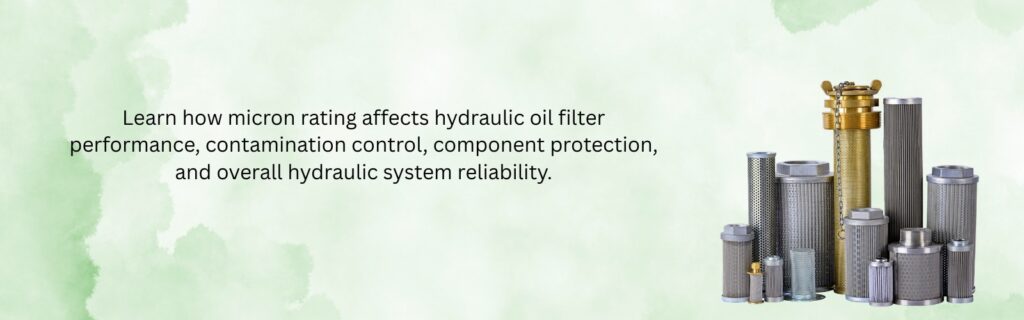
One of the most important factors affecting filtration performance is micron rating.
Many maintenance teams know the term but are often unsure how micron rating affects system performance or why selecting the wrong filter can create serious reliability issues.
Understanding micron ratings helps operators select the right High Efficiency Hydraulic Oil Filters, improve equipment life, and reduce maintenance costs.
Why Hydraulic Oil Cleanliness Matters
Hydraulic oil performs several critical functions within a machine.
It:
- Transfers power
- Lubricates moving components
- Reduces friction
- Removes heat
- Protects internal surfaces
For these functions to be effective, the oil must remain clean.
When contamination enters the system, hydraulic performance begins to decline.
Contamination can cause:
- Pump wear
- Valve sticking
- Seal damage
- Reduced efficiency
- Higher operating temperatures
- Unexpected equipment failure
This is why High Efficiency Hydraulic Oil Filters play such an important role in industrial machinery.
What Is a Micron?
Before understanding filter performance, it is important to understand what a micron is.
A micron is a unit of measurement used to describe particle size.
One micron equals:
0.001 millimeters
To put this into perspective:
- Human hair is approximately 70 microns
- Fine dust particles are around 10 microns
- Many damaging hydraulic contaminants are smaller than 10 microns
Although these particles are invisible to the naked eye, they can cause significant damage inside hydraulic systems.
Why Particle Size Matters
Not all contamination causes the same level of damage.
Large particles may be visible and easier to remove.
However, smaller particles are often more dangerous because they:
- Remain suspended in oil
- Circulate continuously
- Enter tight clearances
- Accelerate component wear
Many hydraulic components operate with extremely small tolerances.
Contamination that appears insignificant can cause major performance issues over time.
This is where High Efficiency Hydraulic Oil Filters become critical.
What Is Micron Rating?
Micron rating refers to the size of particles a filter is designed to capture.
A lower micron rating generally means finer filtration.
For example:
- 25 micron filter removes larger particles
- 10 micron filter captures finer contamination
- 5 micron filter provides even higher filtration efficiency
The correct micron rating depends on the application and equipment requirements.
Why Lower Micron Does Not Always Mean Better
Many people assume the smallest micron rating is always the best choice.
In reality, filtration selection must balance:
- Contamination control
- Flow requirements
- Pressure drop
- Equipment sensitivity
Using an unnecessarily fine filter may:
- Restrict oil flow
- Increase pressure drop
- Reduce efficiency
This is why proper selection of High Efficiency Hydraulic Oil Filters is essential.
How Micron Rating Affects Hydraulic Components
Different hydraulic components have different contamination sensitivities.
Hydraulic Pumps
Pumps are highly susceptible to contamination-related wear.
Particles can damage:
- Gear surfaces
- Pistons
- Bearings
Proper filtration extends pump life.
Servo Valves
Servo valves contain extremely tight internal clearances.
Even tiny contaminants can cause:
- Sticking
- Poor response
- Positioning errors
These applications often require High Efficiency Hydraulic Oil Filters with finer micron ratings.
Proportional Valves
Contamination affects flow accuracy and pressure control.
Clean oil improves performance and reliability.
Hydraulic Cylinders
Contaminants accelerate seal wear and internal scoring.
Proper filtration helps maintain cylinder life.
The Relationship Between Micron Rating and Equipment Life
Research consistently shows that cleaner oil extends component life.
Reducing contamination levels helps:
- Lower wear rates
- Improve reliability
- Extend maintenance intervals
- Reduce operating costs
This is one of the primary reasons industries invest in High Efficiency Hydraulic Oil Filters.
Common Sources of Hydraulic Contamination
Contamination enters hydraulic systems from multiple sources.
These include:
Environmental Dust
Dust enters through:
- Reservoir breathers
- Maintenance procedures
- Open systems
Component Wear
Normal operation creates:
- Metal particles
- Seal fragments
- Wear debris
New Oil Contamination
Even fresh hydraulic oil may contain contaminants.
Moisture
Water contamination accelerates corrosion and oil degradation.
High Efficiency Hydraulic Oil Filters help remove many of these contaminants before they cause damage.
Why Hydraulic Failures Often Start with Contamination
Many hydraulic failures are not caused by component defects.
Instead, they begin with contamination.
Common contamination-related failures include:
- Pump failure
- Valve malfunction
- Excessive heat generation
- Reduced pressure stability
- Seal damage
Proper filtration significantly reduces these risks.
Understanding Filter Efficiency
Micron rating alone does not tell the complete story.
Filter efficiency is equally important.
A filter must not only target a particle size but also consistently capture those particles.
High-quality High Efficiency Hydraulic Oil Filters are designed to provide both:
- Appropriate micron rating
- Reliable filtration performance
Why Return Line Filtration Is Important
One of the most effective locations for filtration is the return line.
Return line filters:
- Capture wear particles
- Remove contamination before oil returns to the reservoir
- Improve overall system cleanliness
MMHP Oil Filters are commonly used in applications where maintaining oil cleanliness is critical.
Real Example: Servo Valve Reliability Improvement
A manufacturing plant experienced repeated servo valve issues.
Symptoms included:
- Erratic movement
- Positioning errors
- Increased maintenance costs
Investigation revealed excessive fine contamination in the hydraulic oil.
After upgrading to High Efficiency Hydraulic Oil Filters with a more suitable micron rating:
- Oil cleanliness improved
- Servo performance stabilized
- Downtime decreased
- Maintenance costs dropped
The solution was not replacing valves—it was improving filtration.
Why OEMs Specify Precise Filtration Requirements
Equipment manufacturers understand the importance of contamination control.
This is why OEMs often specify:
- Filter micron ratings
- Oil cleanliness levels
- Maintenance intervals
Ignoring these recommendations can reduce equipment reliability.
How MMHP Oil Filters Support Hydraulic Performance
MMHP India provides filtration solutions designed for industrial hydraulic systems.
Their oil filters help:
- Control contamination
- Improve oil cleanliness
- Protect critical components
- Maintain hydraulic efficiency
- Reduce maintenance requirements
These benefits contribute to better system reliability and longer equipment life.
Signs That Filtration May Be Inadequate
Watch for:
- Frequent valve issues
- Pump wear
- Rising oil temperature
- Reduced hydraulic response
- Increased maintenance frequency
- Dirty oil appearance
These symptoms often indicate contamination problems.
How to Select the Right High Efficiency Hydraulic Oil Filters
Several factors should be considered:
Equipment Type
Different systems require different cleanliness levels.
Flow Rate
Filters must support required oil flow.
Pressure Conditions
The filter should match operating conditions.
Component Sensitivity
Servo systems typically require finer filtration than basic hydraulic systems.
Maintenance Goals
Filtration strategy should support long-term reliability.
Why Preventive Filtration Is a Smart Investment
The cost of filtration is small compared with:
- Pump replacement
- Valve repair
- Downtime
- Production loss
Investing in proper High Efficiency Hydraulic Oil Filters often delivers significant long-term savings.
Why MMHP Is the Best Choice
MMHP India understands the challenges industries face in maintaining hydraulic system reliability.
Their oil filtration solutions are designed to provide:
- Effective contamination control
- Reliable filtration performance
- Industrial durability
- Long service life
- Consistent hydraulic protection
For businesses looking to improve hydraulic reliability, MMHP provides practical filtration solutions that support efficient and trouble-free operation.
Final Conclusion
Micron rating is one of the most important factors influencing hydraulic oil filtration performance.
The right micron rating helps remove damaging contaminants while maintaining proper flow and system efficiency.
Choosing appropriate High Efficiency Hydraulic Oil Filters improves:
- Component life
- Hydraulic performance
- Equipment reliability
- Maintenance efficiency
MMHP India Oil Filters help industries achieve cleaner hydraulic oil, better contamination control, and improved long-term system performance.
When it comes to hydraulic reliability, cleaner oil always wins.