In pneumatic automation systems, cylinder performance is expected to remain consistent over time. Whether in packaging machines, assembly lines, textile equipment, or material handling systems, smooth and predictable cylinder motion is essential for maintaining production efficiency.
However, many plant operators notice a gradual issue — cylinder retraction starts becoming slower over time.
Initially, machines perform well. But after weeks or months, retraction delays begin to appear. This leads to:
- cycle time increase
- inconsistent automation
- reduced production output
- higher air consumption
Most maintenance teams first suspect:
- cylinder wear
- valve malfunction
- pressure drop issues
But in many cases, the real reason is far simpler — exhaust restriction.
This is where the role of a Pneumatic Exhaust Silencer becomes critical.
Understanding Cylinder Retraction in Pneumatic Systems
A pneumatic cylinder operates using compressed air.
The basic cycle:
- air enters the cylinder to extend the piston
- air on the opposite side is exhausted
- for retraction, the process reverses
For smooth operation, exhaust air must leave the system quickly.
If exhaust is restricted:
- air gets trapped
- pressure builds up
- piston movement slows
- retraction becomes delayed
This is why exhaust design is as important as air supply.
What Causes Exhaust Restriction Over Time?
In many systems, exhaust ports are either:
- left open
- fitted with low-quality silencers
- installed with undersized silencers
Over time, these conditions create problems such as:
- dust accumulation
- oil contamination
- clogging inside silencers
- increased backpressure
Even a small restriction can significantly affect cylinder speed.
Using the right Pneumatic Exhaust Silencer prevents this issue.
How Backpressure Affects Cylinder Retraction
Backpressure occurs when exhaust air cannot escape freely.
This creates resistance inside the cylinder.
Effects include:
- slower piston return
- reduced force output
- inconsistent motion
- increased cycle time
- higher energy consumption
A high-quality Pneumatic Exhaust Silencer is designed to minimize backpressure while controlling noise.
Why This Problem Increases Over Time
The issue is gradual, which is why it is often ignored.
Over time:
- silencers accumulate dirt
- oil mist sticks to internal surfaces
- airflow pathways reduce
- restriction increases slowly
This results in:
- gradual slowdown
- unnoticed efficiency loss
- eventual performance issues
Replacing or upgrading the Pneumatic Exhaust Silencer often restores performance immediately.
Why Standard Silencers Fail
Many low-cost silencers focus only on noise reduction.
They achieve this by restricting airflow.
Problems include:
- high backpressure
- fast clogging
- poor airflow diffusion
- reduced durability
In high-cycle systems, these silencers are not suitable.
Industrial applications require a properly engineered Pneumatic Exhaust Silencer.
How MMHP Pneumufflers Solve the Problem
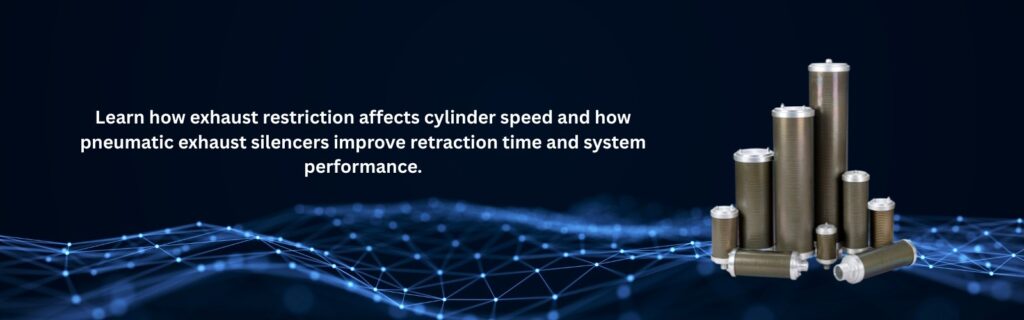
MMHP India Pneumufflers are designed for industrial performance.
They provide:
- low backpressure design
- uniform exhaust diffusion
- high airflow capacity
- durable metal construction
- long service life
This ensures that exhaust air exits smoothly without slowing down cylinder movement.
Using a high-quality Pneumatic Exhaust Silencer helps maintain consistent retraction speed.
Real Example from Automation Line
A packaging plant noticed:
- slow cylinder retraction
- reduced output speed
- inconsistent cycle timing
Initial checks showed:
- pressure supply was stable
- valves were functioning
- cylinders were in good condition
The issue was traced to clogged exhaust silencers.
After installing MMHP Pneumufflers:
- retraction speed improved instantly
- cycle time stabilized
- production increased
- maintenance issues reduced
This is a classic example of how a Pneumatic Exhaust Silencer impacts performance.
Applications Where This Issue Is Common
Exhaust restriction affects systems such as:
- packaging machines
- pick-and-place robots
- textile looms
- printing machines
- bottling lines
- assembly automation
In these systems, consistent cylinder speed is critical.
Using the correct Pneumatic Exhaust Silencer ensures smooth operation.
Signs of Exhaust Restriction
Watch for:
- slower cylinder return
- uneven movement
- hissing or blocked exhaust sound
- increased cycle time
- machine delay between cycles
- vibration near exhaust ports
These symptoms often indicate problems with the Pneumatic Exhaust Silencer.
How to Select the Right Pneumatic Exhaust Silencer
Consider the following:
Flow Capacity
Ensure the silencer can handle required airflow.
Thread Size
Match the exhaust port correctly.
Material
Use metal-based silencers for durability.
Environment
Dusty or oily environments require clog-resistant design.
Duty Cycle
High-speed systems need industrial-grade silencers.
MMHP provides solutions suitable for different industrial needs.
Why Exhaust Control Improves Efficiency
Proper exhaust management:
- improves cylinder speed
- stabilizes automation
- reduces air waste
- lowers energy cost
- increases machine output
A good Pneumatic Exhaust Silencer improves overall system efficiency.
Preventive Maintenance Tips
To avoid exhaust restriction:
- inspect silencers regularly
- clean or replace clogged units
- monitor cycle time changes
- check exhaust flow
- use high-quality silencers
Preventive maintenance reduces unexpected downtime.
Why MMHP Is the Best Choice
MMHP India designs Pneumufflers specifically for industrial environments.
Their products offer:
- reliable performance
- low backpressure
- durable construction
- consistent airflow
- long service life
For applications requiring a dependable Pneumatic Exhaust Silencer, MMHP provides practical and proven solutions.
Final Conclusion
Cylinder retraction slowdown is a common issue in pneumatic systems, but it is often misunderstood.
In many cases, the real cause is exhaust restriction — not valve or cylinder failure.
A properly designed Pneumatic Exhaust Silencer ensures:
- smooth airflow
- minimal backpressure
- consistent cylinder speed
- improved system performance
MMHP India Pneumufflers help maintain efficiency, reduce downtime, and improve automation reliability.
When exhaust flows better, machines perform better.