Introduction: The Small Component That Prevents Big Failures
In industrial systems, solenoid valves are expected to perform with precision — opening and closing fluid flow instantly and reliably. However, many plants face frequent issues like valve sticking, leakage, or delayed response.
The root cause is often not electrical failure — it is contamination.
This is where a Brass Y Strainer plays a critical role.
A Brass Y Strainer is installed upstream of solenoid valves to trap debris before it enters the valve. Without it, even small particles can damage internal components and lead to premature failure.
This blog explains:
- Why solenoid valves fail
- How a Brass Y Strainer prevents it
- Where to install it
- How to select the right one
- And how it improves system reliability
Why Solenoid Valves Fail Prematurely
Solenoid valves are precision devices with:
- Small orifices
- Moving plungers
- Tight sealing surfaces
Even tiny particles can disrupt operation.
Common Causes of Failure
1. Particulate Contamination
Rust, dirt, and scale block internal passages.
2. Plunger Sticking
Debris accumulates and restricts movement.
3. Seal Damage
Abrasive particles damage sealing surfaces.
4. Pressure Instability
Debris causes inconsistent flow behavior.
In most cases, contamination enters from the pipeline itself — especially after installation, maintenance, or system startup.
What Is a Brass Y Strainer?
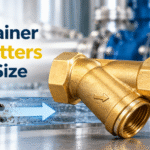
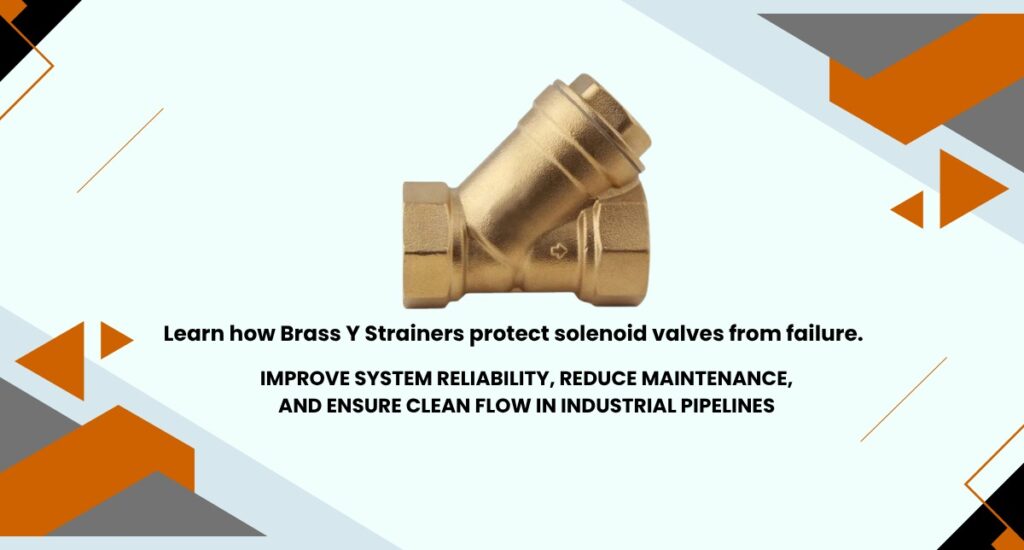
A Brass Y Strainer is an inline filtration device designed to remove solid particles from fluid flow.
Key Features:
- Brass body construction
- Stainless steel mesh screen
- Threaded connections (BSP/NPT)
- Clean-out plug
- Y-shaped chamber for debris collection
The design allows debris to settle in the pocket without restricting flow.
How Brass Y Strainer Protects Solenoid Valves
1. Stops Debris Before It Reaches the Valve
A Brass Y Strainer acts as a barrier between pipeline contamination and the valve.
It captures:
- Rust particles
- Sand
- Welding slag
- PTFE tape fragments
This ensures only clean fluid enters the solenoid valve.
2. Prevents Orifice Blockage
Solenoid valves often have very small openings.
Without filtration:
- Orifices clog easily
- Flow becomes restricted
- Valve fails to operate properly
With a Brass Y Strainer, harmful particles are removed before reaching these openings.
3. Ensures Smooth Plunger Movement
Debris inside the valve can cause sticking.
A Brass Y Strainer ensures:
- Clean flow
- Free movement of plunger
- Reliable valve actuation
4. Protects Valve Seals
Seal damage leads to leakage and inefficiency.
By filtering abrasive particles, a Brass Y Strainer extends seal life and improves valve reliability.
5. Reduces Coil Burnout Risk
When valves stick:
- Coils remain energized longer
- Heat increases
- Failure occurs
Clean operation reduces electrical stress.
Why Brass Is Preferred for Y Strainers
Brass offers:
- Corrosion resistance
- Durability in utility applications
- Cost-effectiveness
- Compatibility with water and air systems
For most industrial pipelines, a Brass Y Strainer is the ideal choice.
Where to Install a Brass Y Strainer
Correct installation ensures maximum protection.
Best Placement:
- Upstream of solenoid valve
- Close to valve inlet
- Y pocket facing downward
- Follow flow direction
Improper installation reduces effectiveness.
Selecting the Right Brass Y Strainer
1. Mesh Size Selection
- 40–60 mesh → general protection
- 80–100 mesh → solenoid valve protection
- 120+ mesh → fine filtration
2. Size and Flow Capacity
Match pipeline size to avoid pressure drop.
3. Pressure Rating
Ensure compatibility with system pressure.
4. Fluid Compatibility
Brass works best for:
- Water
- Air
- Light oils
What Happens Without a Brass Y Strainer
Without a Brass Y Strainer, systems experience:
- Frequent valve failures
- Increased maintenance cost
- System downtime
- Poor process control
The cost of replacing valves far exceeds the cost of installing strainers.
Maintenance of Brass Y Strainer
Maintenance is simple:
- Shut off line
- Open clean-out plug
- Remove mesh screen
- Clean debris
- Reinstall
Regular cleaning ensures long-term performance.
Common Mistakes to Avoid
- Installing incorrectly
- Ignoring cleaning schedule
- Using wrong mesh size
- Assuming pipeline is clean
Startup contamination is a major cause of valve failure.
Industrial Applications
A Brass Y Strainer is widely used in:
- HVAC systems
- Water treatment plants
- Pharmaceutical utilities
- Food processing units
- Chemical dosing systems
In all these industries, protecting solenoid valves is critical.
Role of MMHP India
MMHP India provides Brass Y Strainers designed for industrial pipeline protection. Their strainers help prevent contamination from reaching sensitive components like solenoid valves, ensuring reliable operation, reduced maintenance, and improved system performance across applications.
FAQs
1. What is a Brass Y Strainer used for?
To remove debris from fluid before it reaches sensitive equipment.
2. What mesh size is best for solenoid valves?
Typically 80–100 mesh.
3. Does it reduce flow?
Minimal impact when properly sized.
4. How often should it be cleaned?
Depends on contamination level.
5. Where should it be installed?
Upstream of the solenoid valve.
Conclusion: Simple Protection, Long-Term Reliability
A Brass Y Strainer may seem like a small component, but its impact is significant.
It protects:
- Solenoid valves
- Pipeline systems
- Process reliability
By preventing contamination, it reduces failure, downtime, and maintenance cost.
In industrial systems, reliability starts with prevention — and a Brass Y Strainer is one of the simplest and most effective ways to achieve it.